
UPDATE (Nov. 29, 5:09 PM ET): With 90.9% counted, the PP has 132 seats and Vox 53 (185 combined, plus 2 for UPN) against 115 for the Socialists, per The Guardian’s tally of official results. Pedro Sánchez has called Alberto Núñez Feijóo to congratulate him on the win, PP sources told El País. Read First Feed’s full story on the result here.
UPDATE (Nov. 29, 4:20 PM ET): With 72.7% of the vote counted, Spain’s Interior Ministry results show Feijóo’s People’s Party with 134 seats, Vox with 50 and the PP’s Navarra ally UPN with 2 — 186 combined, 10 more than the 176 needed for a majority in Congress, according to RTVE’s official results page, which cites the Interior Ministry, and The Guardian’s live results, both as of 10:15 p.m. Madrid time (4:15 p.m. ET). Sánchez’s Socialists had 117 seats. Vox was up 17 seats from 2023, while the PP was down 3 and the Socialists down 4. Turnout was about 79.5%, roughly 9 points higher than in 2023. Reuters’ live results, at 65.1% counted earlier in the evening, showed the same 186-seat right-wing total (Reuters lists the PP with UPN included as 136). The count is not final, and seat totals can still shift. Official certified results come after the general count, set for Dec. 4-7.
Spain’s conservative People’s Party and the hard-right Vox party won enough seats together for a majority in the 350-seat Congress in Sunday’s snap general election, according to provisional official results from Spain’s Interior Ministry. That puts the right on course to end Sánchez’s eight years in power and could bring Vox into a national government for the first time, Infobae and the BBC reported.
✅ Confirmed by: Spain’s Interior Ministry provisional count (via RTVE), The Guardian and El País. The PP and Vox have not announced a coalition deal. Full source list at the end of this story.
Neither party talked openly about a coalition during the campaign, but the PP and Vox already govern together in four regions, and Feijóo said earlier this month he would set “clear red lines” in any talks with Vox, the BBC reported. The left-wing Broad Front (Frente Amplio) had 10 seats, and Podemos was shut out of Congress, El País reported.
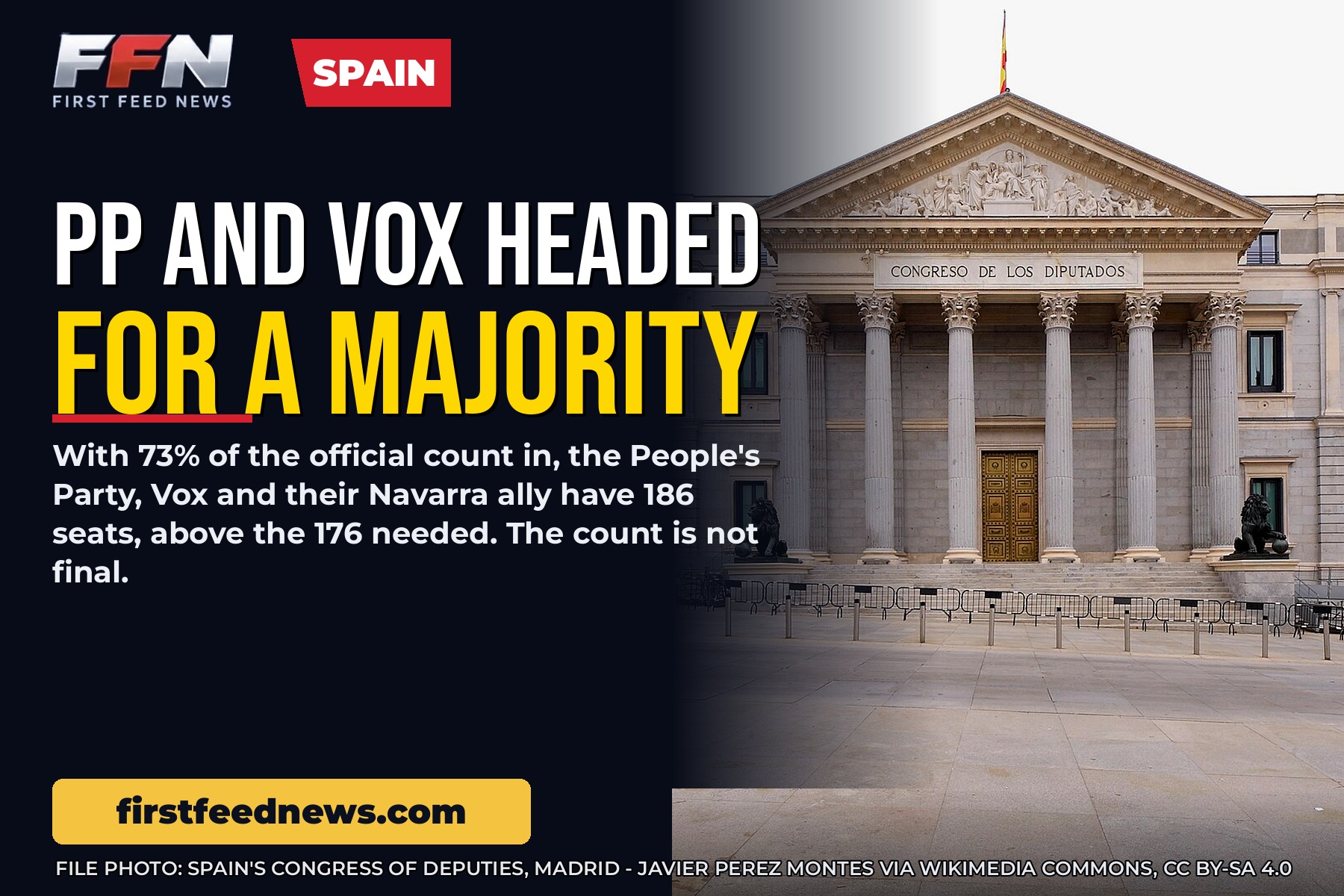
FILE PHOTO: Spain’s Congress of Deputies in Madrid. Photo: Javier Perez Montes via Wikimedia Commons, CC BY-SA 4.0. Not election-night footage.
What the exit poll showed earlier
The survey, conducted by polling firm Sigma Dos for Spanish public broadcaster RTVE and reported by Reuters, projected the People’s Party, led by Alberto Núñez Feijóo, to win 131 to 136 seats and Vox, led by Santiago Abascal, to win 44 to 48. Their combined range of 175 to 184 seats straddles the 176 needed for an absolute majority, Reuters reported, via Al Jazeera.
Prime Minister Pedro Sánchez’s Socialists (PSOE) were projected to finish second, with 119 to 124 seats, and the hard-left Broad Front (Frente Amplio) with 10 to 11, according to the same Reuters account. The poll was based on interviews with 19,500 people between Nov. 13 and Nov. 28, Reuters said.
A PP-Vox alliance would be the first time the far right entered Spain’s national government since the country returned to democracy after the death of Francisco Franco in 1975, Reuters reported. Feijóo’s party already governs four regions in coalition with Vox. Analysts told Reuters that Vox could also support a conservative minority government without taking ministerial posts.
How the vote worked
Sánchez called the snap election in October. Housing costs, immigration and several scandals have hung over the campaign, The Associated Press reported in its Sunday news summary. Turnout by 2 p.m. local time had reached 45.75%, up from 40.5% at the same point in 2023, Spain’s Interior Ministry said, according to Reuters.
Mainland polls closed at 8 p.m. in Madrid (2 p.m. ET). Voting in the Canary Islands ended an hour later. Official results were expected to begin moving after that, the Guardian’s live results page and Spain’s Interior Ministry said. When this story was published, official results had started to appear on public boards, with only about 5% of the vote counted, according to RTVE’s results page citing Spain’s Interior Ministry. Those early official seat totals were still incomplete and could change substantially.
Winning the most seats does not automatically deliver the premiership. In 2023, the PP won the most seats but could not form a government, and Sánchez stayed in office with support from smaller left-wing and regional parties. The new parliament is due to convene in December, after which lawmakers choose the next prime minister.
First Feed will update this story as the official count continues. The 72.7% figures above are the Interior Ministry’s provisional count, not the certified result, which is due after the general count in early December.
Sources
Sources: Spain’s Interior Ministry, as reported on RTVE’s official results page (72.7% counted, 10:15 p.m. Madrid time / 4:15 p.m. ET, Nov. 29); The Guardian live results (same 72.7% count and seat totals); Reuters live results (65.1% counted earlier, same 186-seat right-wing total); Reuters, as reported by Al Jazeera (Nov. 29, RTVE / Sigma Dos exit poll); Associated Press Sunday news summary, 2:09 p.m. ET. Image: Javier Perez Montes via Wikimedia Commons, CC BY-SA 4.0. File photo. Also: El País live coverage (Nov. 29, 22:14 CET); Infobae (Nov. 29); BBC News live page (Nov. 29).








Leave a Reply